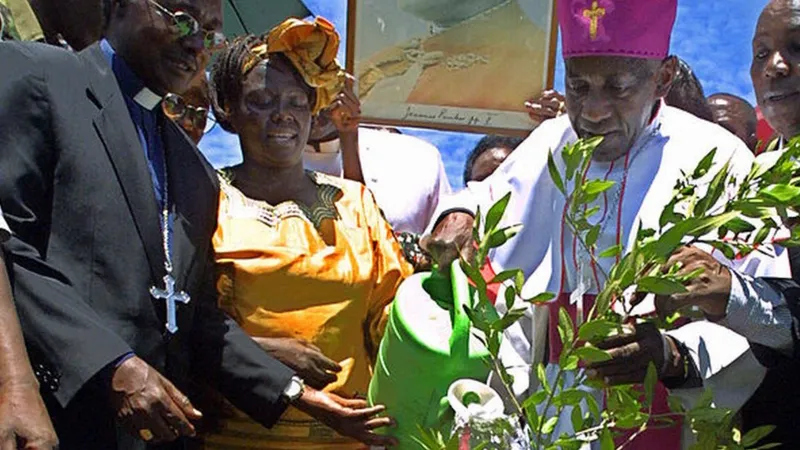
On a quiet Christmas morning in 1931, in the sun‑scorched village of Mwala, Machakos, a child was born who would one day become a shepherd to a nation. Raphael S. Ndingi Mwana a’Nzeki entered the world under colonial rule, but his eyes would gaze upon a free Kenya, and his voice would cry out for justice when that freedom was threatened. He was not born to privilege, but to purpose. From his earliest days, it was clear that God had set him apart.
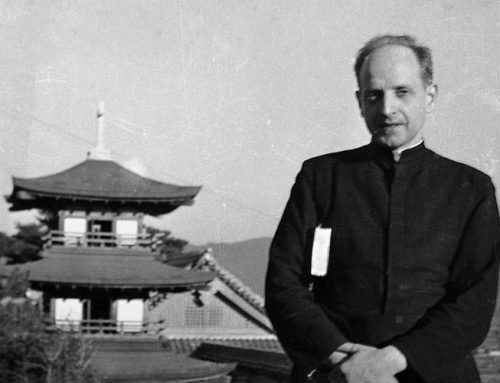
After completing his primary education, young Raphael answered the call to serve by entering Kiserian Seminary. There, in the quiet of prayer and the rigour of study, his faith took root. When obstacles arose, he did not retreat. He sat for the Cambridge School Certificate as a private candidate and excelled, proving that no barrier could contain a heart set on serving the Lord. His journey then took him across the ocean to St. John Fisher College in New York, where he studied political science and history. This was not ambition for its own sake, but a deepening of his understanding, so that he might better serve God’s people in a world of power and politics.
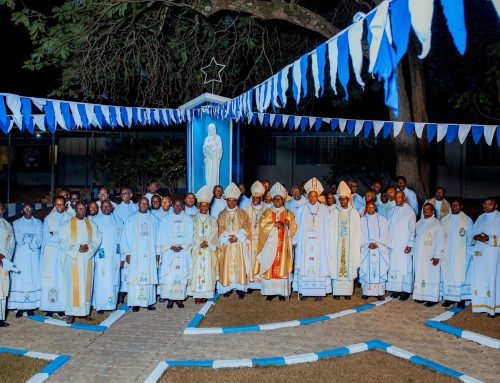
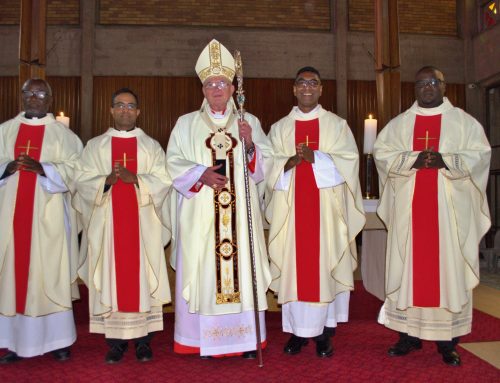
On 31 January 1961, Ndingi was ordained a priest by Archbishop John Joseph McCarthy, at a time when Kenya was awakening to the dawn of independence. He grew with the nation, rejoicing in its hopes, weeping over its wounds, and labouring tirelessly for its healing. In 1969, Pope Paul VI consecrated him a bishop, entrusting him first with the flock of Machakos (1969–1971), and then with the diocese of Nakuru (1971–1997). For nearly thirty years in Nakuru, he walked alongside the suffering: the displaced, the fearful, and the forgotten. He learned the language of pain, and he never forgot it.
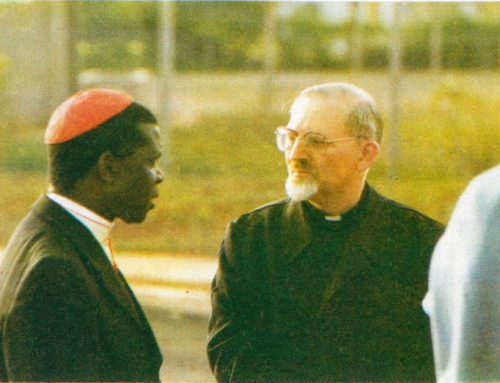
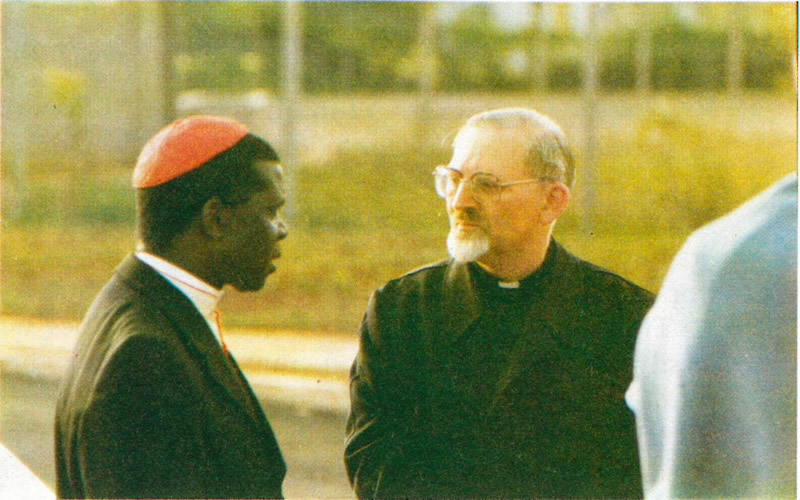
In 1997, he succeeded Cardinal Maurice Michael Otunga as Archbishop of Nairobi. By then, Kenya was groaning under the weight of fear. Yet Ndingi did not retreat into the safety of the sacristy. He stepped into the storm, not as a politician, but as a pastor. His heart ached for the vulnerable, and his voice rang out from the cathedral like a prophet of old.
When the government imposed the mlolongo voting system, forcing citizens to queue publicly and forfeit the secrecy of their ballots, Ndingi saw not just a flawed policy, but an assault on human dignity. He spoke boldly, defending the God‑given right of every Kenyan to vote without intimidation. He understood that fear had become a weapon, and he refused to let it prevail. Whenever he wanted to speak, he would always remember what Idi Amin would say:
“There is freedom of speech, but I cannot guarantee freedom after speech.”
Even more devastating were the ethnic clashes of 1992, when violence swept the land, and thousands lost their lives. While the state remained silent, Ndingi could not. He confronted provincial administrators and police with sorrow and indignation, asking, “Where is your conscience?” He could not remain quiet, for he knew that silence in the face of suffering is a betrayal of the Gospel.
For his courage, he was watched, harassed, and quietly threatened. But he rested in the Lord. As he often reminded those around him,:
“We are not called to be popular; we are called to be faithful.”
And faithful he remained, until the very end.
In 2007, at the age of 75, Pope Benedict XVI accepted his retirement. He stepped down on 6 October, handing over the archdiocese to his former assistant, John Njue. Ndingi left without scandal, without bitterness, without regret. His life had been a gift, and he offered it back to God with humility and peace.
On 30 March 2020, after a long and painful illness, the Lord called His faithful servant home. Cardinal John Njue announced the news, inviting the faithful to pray for the repose of his soul. Kenya mourned, perhaps quietly, but deeply, for a shepherd who had loved his flock without reserve.
Today, Archbishop Ndingi rests in the peace of Christ, but his witness endures. He reminds us that the Church is not a fortress of comfort, but a field hospital for the wounded. He teaches us that faith without courage is empty, and that love without action is incomplete. He showed us that a shepherd does not flee when the wolf approaches; he stands firm, staff in hand, trusting in the Good Shepherd who walks before him.
May we remember Raphael S. Ndingi Mwana a’Nzeki not only as a bishop, but as a brother in Christ, a man who refused to kneel before power, because he had already knelt before the Lord.
Eternal rest grant unto him, O Lord, and let perpetual light shine upon him. May he rest in peace. Amen.
Philip Opiyo
Librarian | JHIA