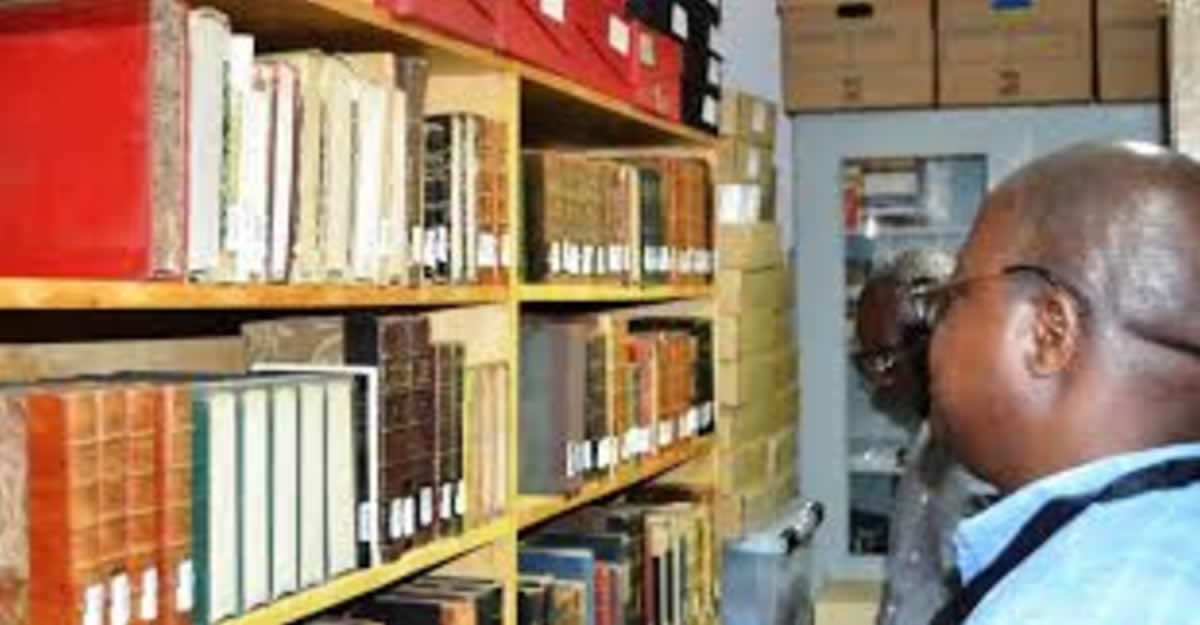
For many first-time researchers, entering an archive can feel surprisingly unfamiliar. At first glance, archives and libraries may appear similar: both preserve knowledge, support scholarship, and provide access to historical materials. Yet anyone who has worked in both spaces quickly discovers that visiting an archive is fundamentally different from visiting a library.
Libraries are designed primarily for broad access and user independence. Readers search catalogues, browse shelves, borrow books, and move freely through collections. Archives, however, operate according to a different logic: preservation, provenance, and controlled access. Their purpose is not simply to circulate information, but to safeguard unique and often irreplaceable records for future generations.
Unlike published books found in libraries, archival materials are typically unpublished and unique. They may include handwritten correspondence, missionary diaries, parish registers, photographs, administrative records, personal notebooks, maps, or institutional files. These records are often fragile and exist in only one original form. For this reason, archives prioritize careful handling and supervised consultation.
The distinction becomes even more significant in religious archives such as the Jesuit Historical Institute in Africa (JHIA). Here, archival materials are not merely historical artifacts; they are witnesses to lived faith, missionary encounters, pastoral struggles, and the evolving story of the Church in Africa. A missionary’s handwritten letter, a novitiate register, or the minutes of an early parish council carry spiritual, cultural, and historical value that cannot easily be replaced.
Another major difference lies in how materials are organized. Libraries generally classify books by subject, author, or title, enabling users to browse independently. Archives, on the other hand, organize records according to provenance — preserving records according to the person, institution, or office that created them. Maintaining original order helps preserve the context in which records were produced and used.
For researchers, this means archival work requires greater preparation and patience. Materials are often stored in closed stacks or off-site facilities and must be requested through finding aids and container lists rather than being located directly on shelves. Researchers are therefore encouraged to contact repositories in advance, review finding aids carefully, and plan sufficient time for consultation.
Archival reading rooms also operate under stricter preservation protocols. Pens, food, drinks, and careless handling are prohibited because even minor damage can permanently affect fragile documents. Depending on the condition of materials, archivists may require book cradles, gloves, or supervised handling procedures. These rules are not barriers to research; rather, they are safeguards that ensure historical records remain available for future generations.
Researchers visiting the JHIA archives are encouraged to:
- Contact the archive in advance regarding appointments and access requirements.
- Review finding aids before visiting.
- Bring pencils, notebooks, and storage devices where permitted.
- Handle records carefully and respectfully.
- Take detailed citation notes.
- Consult archivists, whose specialized knowledge often reveals important connections not immediately visible in catalogues.
Archival research also invites openness to discovery. Unlike libraries, where researchers often locate exactly what they seek, archives frequently reward patience with unexpected findings. As one researcher once observed, “Serendipitous discovery was an important part of many fellows’ research projects.”
Ultimately, visiting an archive is not simply a search for information. It is an encounter with memory, context, and human experience preserved through records. The slower pace, careful procedures, and physical interaction with original documents are not inconveniences but part of a deeper research encounter.
In religious archives, especially, these experiences carry added meaning. To handle a century-old missionary letter or a congregation’s first membership register is to come into contact with the lived realities of faith, mission, and community. The archivist’s careful rules — pencils only, supervised reading rooms, controlled handling — are therefore acts of stewardship, ensuring that these fragile traces of the past continue to survive for future generations.
By Philip Opiyo – Librarian | Jesuit Historical Institute in Africa (JHIA)