In the early 1900s, the shores of Lake Victoria echoed with the rhythms of traditional Luo life; fishing, farming, cattle keeping, and storytelling beneath the shade of giant fig trees olwa. Amid this vibrant cultural landscape, a quiet but transformative chapter in Kenya’s religious history began in 1906 at Gendia Village, near Kendu Bay in present-day Karachuonyo, Homa Bay County. Today, a commemorative plaque marks the site where the first Seventh-day Adventist (SDA) church in Kenya was established, commemorating the humble origins of a faith community that would eventually spread across the country.
The mission was pioneered by Arthur Asa Grandville Carscallen, a Canadian-born missionary, and Peter Nyambo, an African Adventist worker from Nyasaland (present-day Malawi). The two had studied together at Duncombe Hall Training College in England before arriving in British East Africa in November 1906. Carscallen later became the first superintendent of the British East Africa Mission and made a lasting contribution by reducing the Dholuo language to writing and translating the New Testament into Dholuo. Nyambo worked alongside him at Gendia for approximately four years, helping to establish the foundation of the new mission.
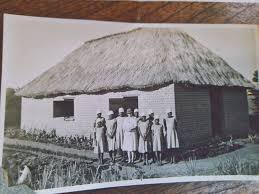
The success of the mission depended greatly on the goodwill of the local community. Rather than acquiring land through colonial administration, the missionaries were welcomed by respected local leaders. Osumba, the son of Simba, initially donated land upon the missionaries’ arrival at Kendu Bay. Later, Elders Ougo Onyango and Chief Orinda generously provided the hilltop site at Gendia where the first wooden church, with mud walls and a grass-thatched roof, was constructed.

The modest structure soon became much more than a place of worship. It served as a centre for Christian fellowship, education, literacy, health instruction, and community development. Early believers travelled long distances, often barefoot, to attend Sabbath services. They worshipped in Dholuo, studied the Scriptures by the light of lanterns, and shared simple meals of fish, ugali, and traditional vegetables. The mission introduced principles of Sabbath observance, healthful living, education, and Bible study, which gradually transformed many lives within the surrounding communities.
The first converts were members of the local Luo community. Initially, only two young men from the Kakwajuok clan, Isaac Okeyo Midamba and Thomas Ojiero accepted the Adventist message. By the close of 1906, seven additional converts from the neighbouring Konyango clan had joined them, including Samuel Dola, Daniel Aroka, and John Odago. These early believers formed the nucleus of what would become the first organized Seventh-day Adventist congregation in Kenya.
A defining milestone in the growth of the Adventist faith among the Luo people occurred on 21 May 1911, when the first Luo converts were baptized at Gendia. This event publicly affirmed the commitment of the early believers after several years of Bible instruction, discipleship, and spiritual preparation. The baptism represented far more than an individual profession of faith; it marked the establishment of an indigenous Adventist community rooted within Luo society. It demonstrated that the Christian message had taken firm root among the local people and provided a strong foundation for the rapid expansion of the Seventh-day Adventist Church throughout western Kenya and beyond. The courage and conviction of these first baptized believers inspired many others to embrace the faith, setting in motion a movement that would influence generations to come.
From this single village mission, the Adventist message spread steadily across Nyanza, Central Kenya, and eventually throughout the country. Schools, health facilities, churches, and mission stations emerged as enduring testimonies to the work that had begun on the quiet hill overlooking Kendu Bay. Today, Gendia is widely regarded as the Bethlehem of Adventism in Kenya, symbolizing the birthplace of the Seventh-day Adventist Church in the nation.
More than a century after its founding, Gendia remains a place of profound historical and spiritual significance. The story of its pioneers reminds us that great movements often begin with humble acts of faith, vision, and sacrifice. What started as a simple grass-thatched church built through the generosity of local Luo elders and the dedication of a handful of missionaries and early converts has grown into one of Kenya’s largest Christian communities. As pilgrims, historians, and believers continue to visit this historic site, Gendia stands as a lasting reminder that enduring legacies are built through commitment, service, and an unwavering faith that transcends generations.
Philip Opiyo
Librarian | JHIA