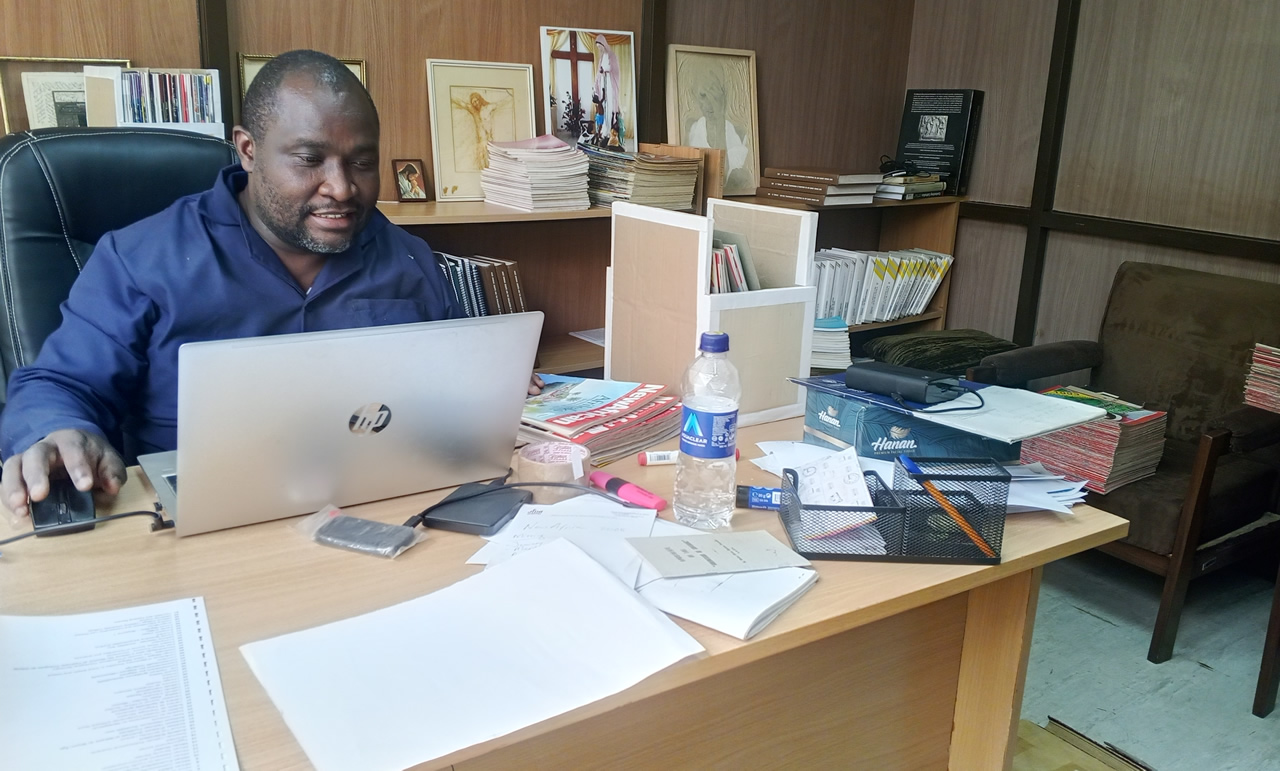
From Monday 10 August to Thursday 10 September 2026, the Jesuit Historical Institute in Africa had the pleasure of welcoming Fr. Robert Burhama, a student at the Vatican School of Library Science (Scuola Vaticana di Biblioteconomia), for a one-month internship.
During his time at the Institute, Fr. Burhama brought energy, commitment, and practical expertise to a range of tasks related to the organization and classification of documentary resources. The internship offered him an opportunity to discover the Institute’s work more closely and, above all, to make a concrete contribution to the preservation, organization, and accessibility of its valuable documentary heritage.
Bringing Order to the Collections
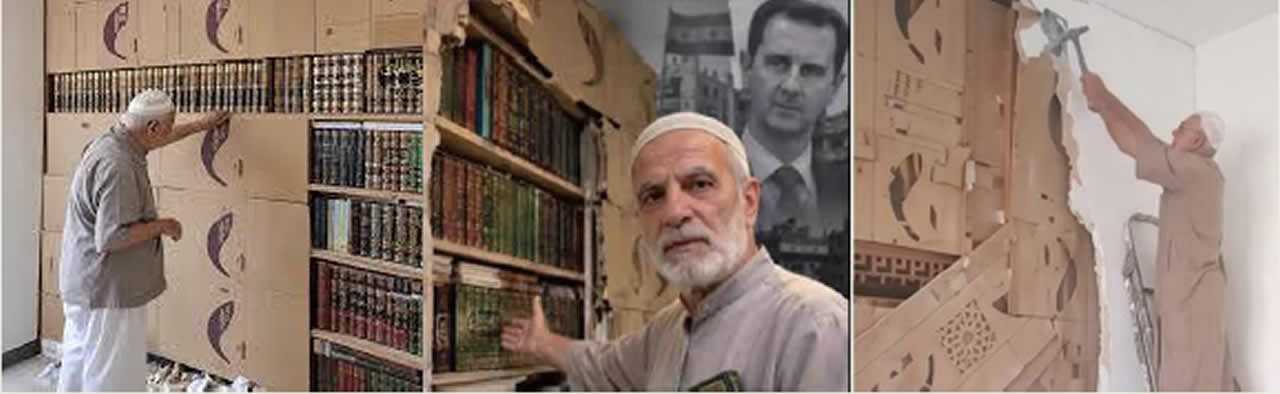
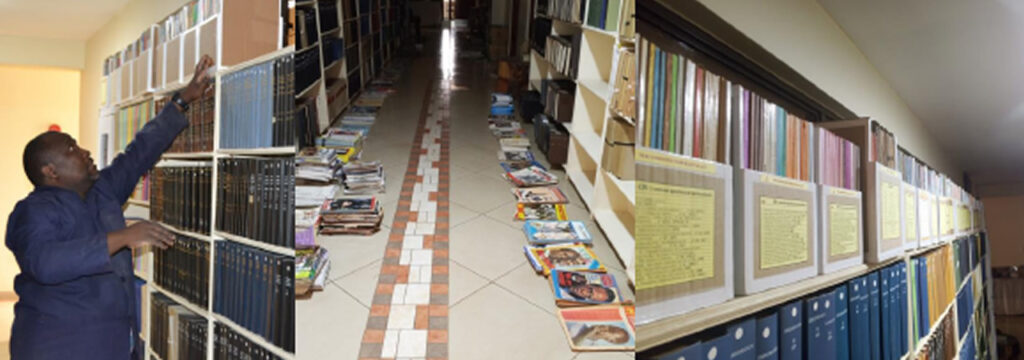
One of the main focuses of Fr. Burhama’s internship was the organization and classification of the Institute’s periodicals. With care, patience, and method, he participated in sorting, arranging, and organizing the various journals, magazines, and newspapers held in the Institute’s collections.
Although often meticulous and behind-the-scenes, this work is essential. Proper classification and storage not only contribute to the long-term preservation of the collections but also make it easier for researchers to locate and consult the resources they need. In this sense, every carefully organized document becomes part of a larger effort to safeguard the historical memory of the Society of Jesus and its mission in Africa.
Creativity, Recycling, and Care for Creation
Fr. Burhama also distinguished himself through his creativity and resourcefulness in making use of materials already available at the Institute.
With a concern for reducing waste and limiting the amount of material that might otherwise be burned – and consequently contribute to CO₂ emissions – he developed a simple but ingenious approach to recycling cardboard. Rather than discarding cardboard boxes and packaging materials, he transformed them into practical storage boxes for organizing and protecting documents (reviews, magazines, journals).
This initiative gave a second life to materials that might otherwise have been thrown away or burned. At the same time, it provided the Institute with a simple and cost-effective solution to some of its storage needs.
His initiative raises a broader question that is worth considering: could reuse and recycling become a more sustainable way of managing the cardboard and packaging materials that we so often discard or burn?
For an institution committed to preserving the past, such a gesture also points towards a more responsible way of caring for the future.
Learning Through Service
Beyond the specific tasks entrusted to him, the internship enabled Fr. Burhama to become more familiar with the work and mission of the Historical Institute. It also strengthened his skills in documentary organization and reinforced the importance of precision, method, and consistency in archival work.
Through this experience, he gained a deeper appreciation of the vital role played by classification and preservation in safeguarding documentary and historical heritage. Archives are not simply collections of old documents; they are a living memory that enables researchers today – and future generations – to understand the people, institutions, and events that have shaped the history of the Church and the Society of Jesus in Africa.
A Valuable Contribution
The team of the Jesuit Historical Institute warmly acknowledges Fr. Burhama’s commitment, seriousness, creativity, and willingness to seek practical solutions. His presence and work have contributed meaningfully to improving the organization of the collections and strengthening the conditions for the preservation of the Institute’s documentary heritage.
We are deeply grateful to Fr. Robert Burhama for his dedication and service during his time at the Historical Institute. We wish him every success in his studies and in his future work in the field of library and archival science.
Jean-Paul SAVI – Director | JHIA