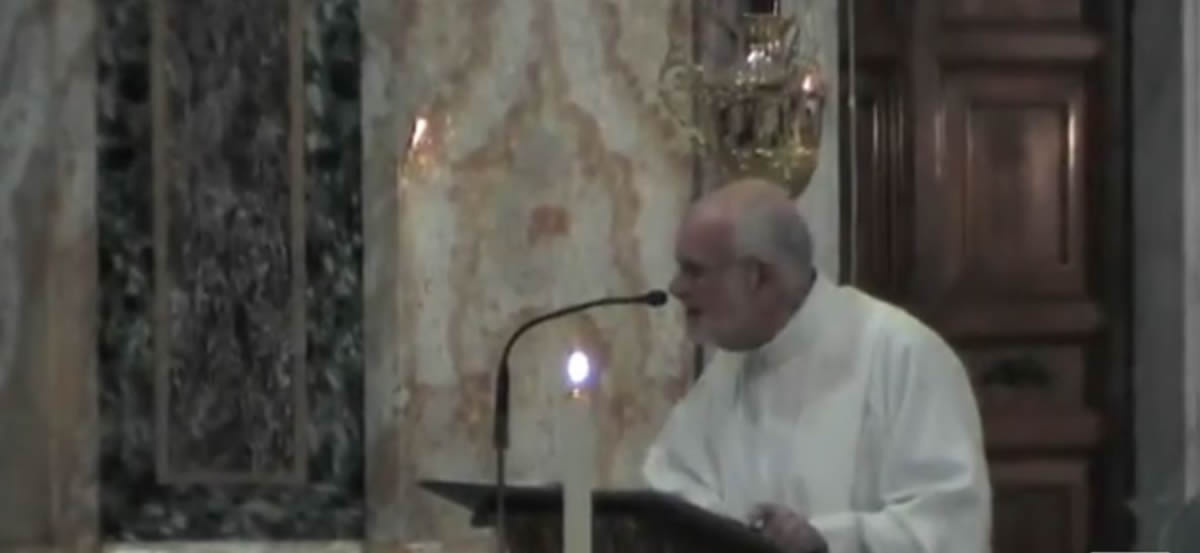
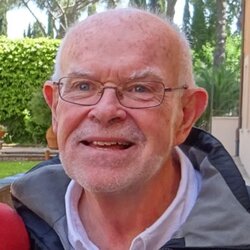
 In an age often drawn to dramatic conversions and decisive turning points, the life of Fr. William “Bill” Considine, SMM, unfolds along a quieter, but no less profound path: that of steady fidelity. In conversations with students from Hekima University College, his story emerges not as a series of extraordinary moments, but as a deeply human journey, one shaped by grace, discernment, and a lifelong willingness to respond to the needs of the Church as they arose.
His narrative is at once personal and ecclesial. It mirrors, in many ways, the broader story of the Church in the latter half of the twentieth century: a Church grappling with change, seeking renewal, and learning, often imperfectly, how to live the vision of the Second Vatican Council.
Fr. Considine’s early years in New York City were marked by simplicity rather than distinction. Raised in a working-class family in Queens, he grew up in a home where faith was present not as abstraction, but as a lived reality woven into daily life. His father worked as a dock labourer, a demanding and often unstable occupation, yet one that grounded the family in resilience, discipline, and quiet perseverance.
The parish played a central role in shaping his imagination. Entrusted to the Montfort Missionaries, it introduced him to a form of Catholic life that was both Marian and missionary. But perhaps more influential still were the Daughters of Wisdom, who taught in his school. Their presence offered a model of religious life that was marked not by severity, but by gentleness. They taught with patience, related with warmth, and embodied a faith that was attractive rather than imposed.
In recalling this period, one senses that vocation did not emerge from pressure or expectation, but from attraction. It was not imposed from above; it grew from within.
This quiet awakening found its turning point during a school retreat, when a young Bill encountered True Devotion to Mary by St. Louis de Montfort. What might have been, for many, simply another devotional text became for him an interior illumination. He describes the experience as something that “blew his mind”, a moment in which previously scattered intuitions came into focus. The Montfortian charism, with its emphasis on total consecration and missionary discipleship, resonated deeply.
Yet even here, his story resists dramatization. There was no immediate leap, no sudden certainty. Rather, there was a growing clarity, recognition, over time, that this path was his.
If his early life was marked by stability, his formation years unfolded in a time of profound upheaval within the Church. Entering religious life in the mid-1960s, Fr. Considine found himself at the heart of a Church undergoing the transformations of the Second Vatican Council. These were not abstract theological debates; they were lived realities that shaped prayer, community life, and apostolic vision.
The novitiate, by his own account, was not easy. It demanded adjustment, silence, discipline, and the challenge of integrating into a new way of life. Like many, he experienced moments of uncertainty, even disorientation. Some of his companions discerned that religious life was not their path and left. These departures, rather than destabilizing him, seem to have deepened his own discernment. In seeing others choose differently, he came to recognize more clearly his own call.
At the same time, his formation was enriched by exposure to the emerging spirit of Vatican II. Teachers and formators began introducing new theological insights, liturgical reforms, and a renewed understanding of the Church as the People of God. The faith he had received as a child was not abandoned, but expanded, opened to new horizons.
This interplay between continuity and change would become a defining feature of his ministry.
Ordained in 1973, Fr. Considine entered parish ministry at a time when the Church was still learning how to live the reforms of Vatican II. The parish was a place of experimentation, energy, and, at times, confusion. Liturgies were being renewed, lay participation was increasing, and new forms of pastoral engagement were emerging.
For a young priest, it was both demanding and formative. He found himself engaged in a wide range of ministries: celebrating the sacraments, teaching, visiting the sick, and accompanying families in moments of crisis. These encounters, particularly with those who were suffering, left a lasting impression. They grounded his priesthood in the concrete realities of human life, far from abstraction.
And yet, just as he was settling into this rhythm, his path shifted.
Within two years, he was called away from parish ministry to serve as novice master. It was not a role he had sought, nor one for which he felt fully prepared. But it was accepted in the same spirit that had marked his earlier decisions: openness and trust.
This transition would prove decisive. Formation, rather than parish ministry, would become the central thread of his life.
To accompany young men in their discernment is no small task, particularly in a time of ecclesial and cultural change. As novice master, and later in other formation roles, Fr. Considine found himself navigating the delicate balance between structure and freedom, tradition and adaptation, authority and listening.
The challenges were real. The decades following Vatican II were marked by significant shifts in religious life, including declining vocations in some regions and changing expectations among those entering formation. Questions of identity, commitment, and mission were being asked with new urgency.
In this context, formation could no longer rely solely on inherited models. It required creativity, patience, and, above all, attentiveness to the individual. Fr. Considine’s approach appears to have been shaped less by rigid systems and more by relational accompaniment, helping individuals discern rather than simply conform.
This emphasis on accompaniment would remain central throughout his ministry.
His election as Superior General of the Montfort Missionaries in 1993 marked a new phase, one that expanded his horizon from the local to the global. Leading an international congregation is a task that demands not only administrative skill, but also cultural sensitivity, theological depth, and spiritual rootedness.
The context he inherited was complex. While some regions of the congregation were experiencing decline, others, particularly in Africa and Asia, were witnessing new growth. This shift required a reimagining of mission and identity within a global framework.
Travel became a regular part of his life. He visited communities across continents, encountering a wide diversity of contexts, challenges, and expressions of faith. These experiences deepened his awareness of the Church’s universality, but also of its diversity.
One of his key priorities was fostering unity within this diversity. This was not about uniformity, but about cultivating a shared sense of belonging and mission across different cultures and contexts. He also worked to strengthen collaboration within the wider Montfortian family, recognizing that their shared charism could be more fully lived in partnership.
Leadership, in this sense, was less about control and more about communion.
Throughout his reflections, Fr. Considine demonstrates a keen awareness of the broader forces shaping the Church. He speaks candidly about the challenges facing religious life: changing social structures, new professional opportunities, and the impact of secularization. He does not ignore the painful reality of abuse scandals, acknowledging their profound effect on trust and vocation.
At the same time, he remains attentive to signs of hope. He recognizes the vitality of the Church in new contexts and the ongoing search for meaning among younger generations.
His perspective is neither nostalgic nor cynical. It is marked by realism, tempered by faith.
What emerges most clearly from his story is not a list of achievements, but a pattern of response. Time and again, he was invited into roles he had not planned for; novice master, leader, Superior General, and time and again, he said yes.
There is a quiet courage in this kind of life. It is not the courage of dramatic gestures, but of daily fidelity: of showing up, of listening, of accompanying, of trusting that God’s grace is at work even in uncertainty.
In this sense, his life offers a different model of vocation, one that unfolds not through control, but through availability. His story carries a particular resonance. It reminds us that the history of the Church is not only written in councils, documents, or institutions, but in lives, lives that, often quietly, embody the tensions, hopes, and transformations of their time.
Fr. Considine’s journey invites us to see vocation not as a fixed path, but as a relationship, one that deepens over time, shaped by both personal discernment and the needs of the wider Church.
And perhaps this is the most enduring lesson of his life: that fidelity, lived patiently and generously, becomes its own form of mission.
This article is based on the interview by Charles Iragena, SMM & Chancy Mterera, SMM (Hekima University College, April 2026).