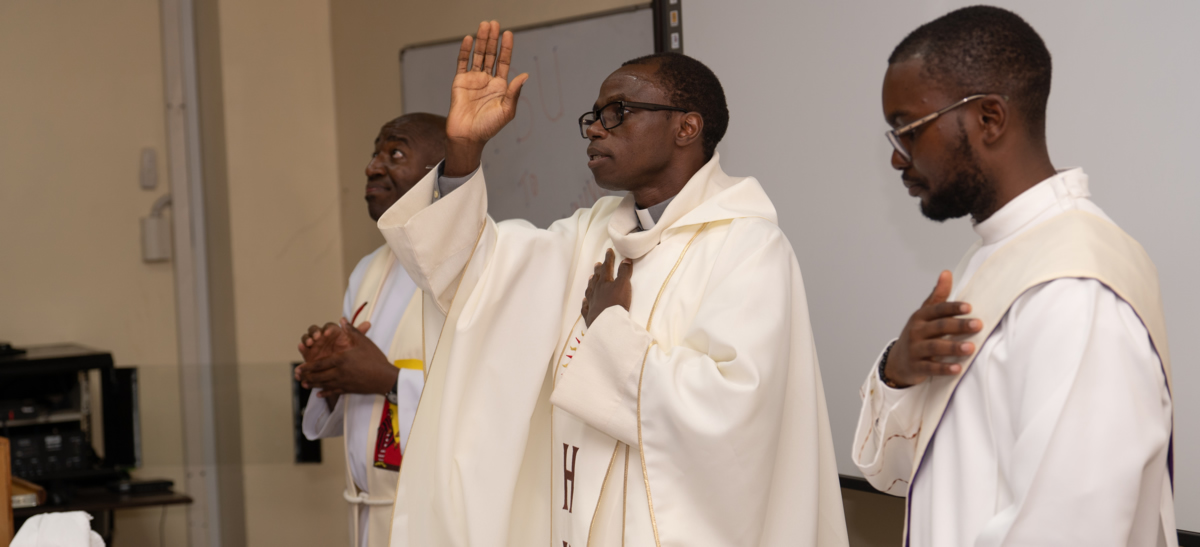
On 11th April 2026, the Arrupe Amani Campus of Hekima University College along Riara Lane came alive with joy, gratitude, and a deep sense of communion as the West African Community in Nairobi gathered to celebrate Fr. Norbert Litoing, SJ, on the occasion of his Final Vows. The community—comprising students of Hekima, partners, diplomats, faculty, non-teaching staff, and friends—offered not just a celebration, but a heartfelt expression of belonging and shared faith.
The day began with a vibrant Eucharistic celebration in the conference hall, Fr. Norbert Litoing, SJ presided and Fr. Bomki, SJ, whose homily set a reflective and deeply spiritual tone. Preaching on Divine Mercy Sunday, he invited the congregation to contemplate the boundless mercy of God—reminding all that “if you offend, ask for pardon; if offended, forgive.” His words gently but firmly drew attention to the heart of the Christian life: reconciliation, compassion, and the courage to begin again.
The Eucharistic celebration carried a deeper significance as it brought together two important moments in the life of the Church and of Fr. Norbert himself. As was recalled during the homily, on 25th March—the Feast of the Annunciation—the community had gathered at the Hekima University College Chapel to witness his Final Incorporation into the Society of Jesus, a truly grace-filled moment. This present celebration, coinciding with Divine Mercy Sunday—the Second Sunday of Easter marking the close of the Easter Octave—added a rich spiritual dimension to the occasion. It felt providential that these two celebrations converged, highlighting both the personal commitment of Fr. Norbert and the wider call to mercy, forgiveness, and renewal within the Church.
Linking the liturgical celebration with the life of Fr. Norbert, Fr. Bomki described him as a man whose vocation mirrors the very essence of Divine Mercy—marked by humility, discretion, and a quiet but profound love for God and others. He spoke of the confessional as a “mercy seat,” a place where wounds are healed and dignity restored, and noted how those who encounter God’s mercy are called to become instruments of that same mercy in the world—through simple but demanding acts of love: feeding the hungry, caring for the vulnerable, and living with integrity in everyday life.
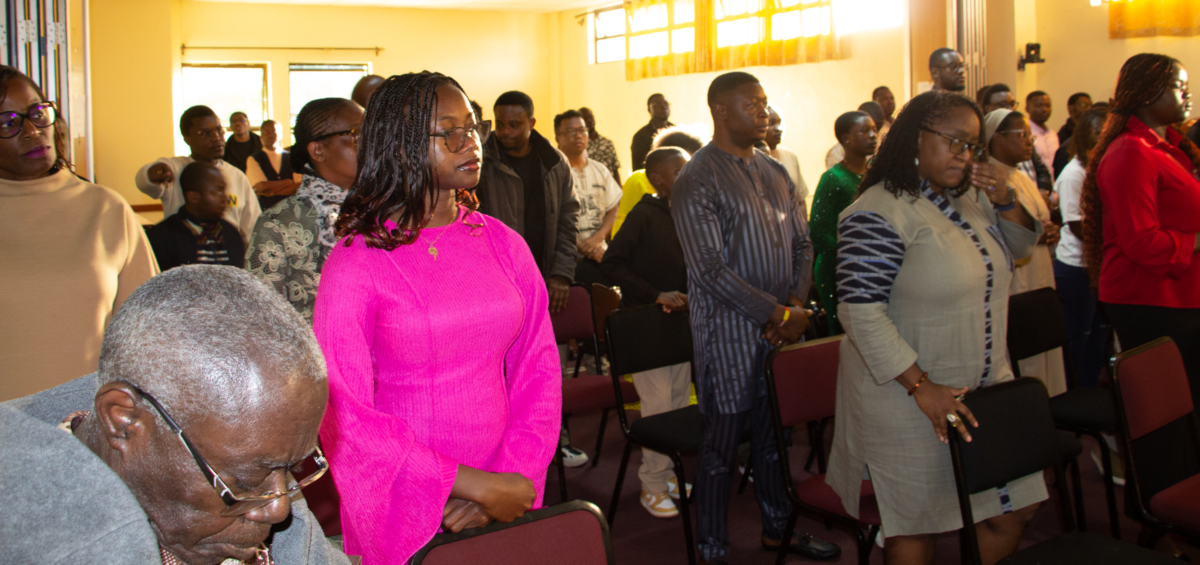 In a world often marked by conflict and division, the homily also echoed a strong call for peace. Drawing from the Gospel, he reminded the faithful of Christ’s enduring greeting: “Peace be with you.” It was a message that resonated deeply—not only as a spiritual ideal, but as a lived reality that begins in hearts, families, communities, and extends to nations. In many ways, this call to peace and reconciliation found a living witness in the life and vocation of Fr. Norbert.
Following the Mass, the celebration continued with a lively reception in the cafeteria. There was plenty of food, shared generously, and the atmosphere quickly transformed into one of storytelling, laughter, and cultural pride. Speeches flowed naturally into songs and dances, punctuated by rich West African cultural expressions that brought color and rhythm to the evening.
Throughout the speeches, a consistent image of Fr. Norbert emerged: a man grounded in simplicity, deeply committed to his calling, and unattached to worldly recognition. This portrait was not only painted by others but was also evident in his own words.
In his address, Fr. Norbert reflected on a vocation that has shaped him since childhood. “I am a priest… and since the age of ten, that has been the orientation of my life,” he shared. He spoke candidly of the journey—marked by “ups and downs… lights and shadows”—yet sustained by the unwavering faithfulness of God. That faithfulness, he noted, often came through people: family, friends, and companions who reminded him of God’s presence in moments of doubt.
With humility and a touch of humor, he acknowledged the scale of the celebration, recalling that he had initially hoped for something simple. Yet, standing before such a vibrant and loving community, he embraced the moment as a grace—an opportunity to give thanks and to recognize Nairobi as a place that had become home in a short span of time.
He expressed gratitude to the many individuals and groups who had accompanied him along the way, including fellow Jesuits and friends from diverse backgrounds. In a particularly touching moment, he paid tribute to Sr. Carine Tarla, appreciating her quiet but meaningful presence as she prepared to depart Nairobi.
What emerged clearly from both the homily and the celebration was that this was more than a personal milestone. It was a communal affirmation of vocation—a reminder that the call to serve God is nurtured within relationships, strengthened by culture, and sustained by faith.
As the evening drew to a close, what lingered was not just the music or the shared meal, but a deeper sense of gratitude. Fr. Norbert’s life stood as a gentle testimony: that true greatness lies not in status or recognition, but in fidelity, humility, and an abiding trust in the mercy of God—a mercy that calls each person to become a source of peace in a fragile world.
By Geoffrey Obatsa – Admin Assistant | Jesuit Historical Institute in Africa (JHIA)