Seventeen years after the last papal visit, the arrival of Pope Leo XIV in Cameroon feels different. From 15 to 18 April 2026, he will travel through Yaoundé, Bamenda, and Douala under the guiding theme, “May they all be one” (John 17:21), as announced by the National Episcopal Conference of Cameroon (CENC).
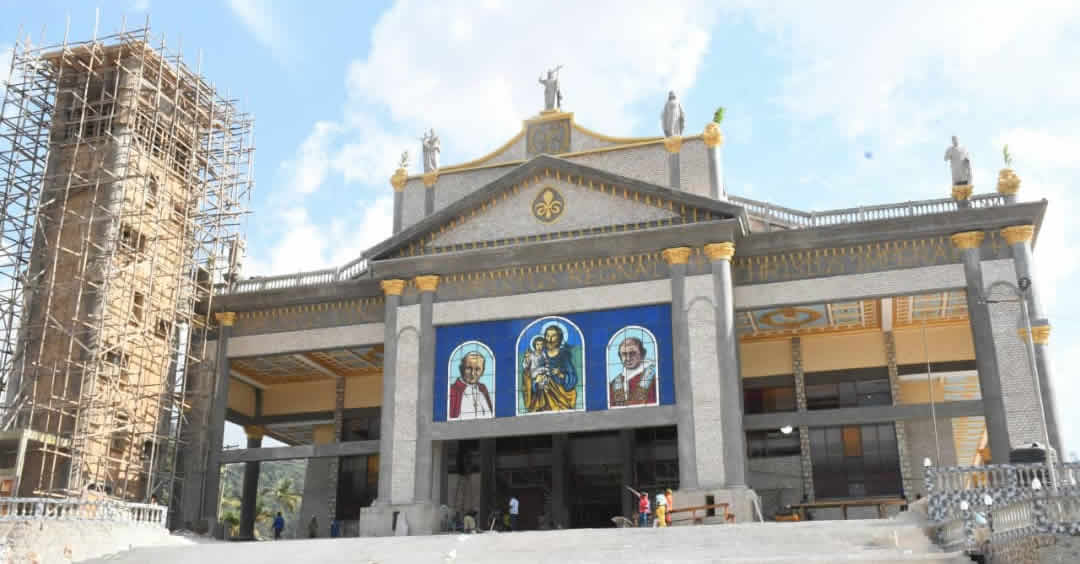
This visit comes at a time when many of us carry questions we cannot easily answer, and wounds we have learned to live with. For me, it is not just a national moment; it is deeply personal. On 16 April, he will stand in Bamenda, in St Joseph’s Cathedral, my home parish, and with that, something quietly stirs: hope. There is something about a cathedral that goes beyond its walls. Like any true house of worship, it is a place where people come not simply because everything is clear, but also because it is not. It is a house of prayer, a place of stillness and reflection, where human longing meets the presence of God. It is also a place where silence is honoured, where prayers are sometimes sighs, and where stories, spoken or unspoken, find a kind of shelter, held not only by the community, but before God who listens even when words fail.
This “Meeting for Peace” feels so important, not because it will solve everything, but because it creates a moment where we might begin again to tell our stories, to listen, and probably to heal slowly. The Anglophone crisis has changed us. It has shaped how we remember, how we speak, and sometimes how we avoid speaking. There are things we have seen: lives lost, homes emptied, families separated, voices silenced, and the quiet fear that lingers longer than we admit. There are things we have lost: time, trust, a sense of normal life. There are also things that we still struggle to understand. And yet life goes on as we carry both faith and the weight of what we have lived through.
When the Pope comes, I do not expect answers. I think many of us do not. What we hope for is something simpler, and perhaps more difficult: to be seen, to be heard, to be reminded that our suffering is not forgotten. A father does not simply sit in silence. He asks questions, gentle ones, probing ones, sometimes the very ones we are afraid to voice ourselves: Why has trust broken so deeply? What grievances have gone unaddressed for so long? How can we name the pain without it dividing us further? What fears keep us from speaking honestly to one another? The Pope can listen to those questions, especially the silenced or unmasked ones, the ones whispered in private, or buried under years of mistrust. Yet he comes not only to listen.
In his Message for the World Day of Peace 2026, Pope Leo XIV speaks of an “unarmed and disarming” peace: humble, persevering, rooted in the risen Christ’s greeting, “Peace be with you!” It is a peace that resists violence not through force, but through moral clarity, patient dialogue, conversion of hearts and the creation of spaces for genuine encounter. He comes, then, to speak this peace, to proclaim it, to name it, and to call it forth among us, reminding us that it is still possible. And perhaps it is this word, spoken in a place like the cathedral, that we hope will endure beyond the moment itself: not only heard, but received, carried, and gradually lived. And because he speaks not only to us, but before the world, his word goes beyond the cathedral, giving our suffering a voice that cannot easily be ignored. Under the banner “May they all be one.” This message carries the quiet authority of hope itself. In Bamenda, that vision feels close to home.
I imagine the cathedral filled with many voices: voices of pain, confusion, longing, and faith. They may not agree; they may not even fully understand one another, but perhaps they can be held together, even for a moment, without fear. The Pope’s presence could invite those unspoken questions into the light, not to demand immediate solutions, but to allow them to be named truthfully, heard without judgment, and carried communally.
Can this visit herald genuine change? Reconciliation? The realities are complex, and the road ahead remains long. The Anglophone crisis persists as a painful stalemate, with ongoing insecurity, displacement, and deep divisions. Yet the choice of Bamenda for a dedicated “Meeting for Peace” at St Joseph’s Cathedral is no accident. It places the wound at the centre of international attention and moral concern. Archbishop Andrew Nkea Fuanya of Bamenda has described the Pope “as a messenger of peace, an ambassador of reconciliation and promoter of justice,” and called the visit a “rising sun” of hope amid the “a lot” the people have endured (Vatican News, 26 Feb. 2026; ACI Africa, 27 Feb. 2026).
Analysts and commentators suggest that if strategically leveraged, the papal visit could serve as a catalyst for dialogue in the Anglophone crisis, reaffirm the need for inclusive governance, and reposition the Church as a credible mediator, potentially fostering renewed momentum toward talks that address root causes like marginalisation and identity.
Beyond a courtesy call, what can we hope for? Not overnight miracles, but small, courageous shifts: a renewed willingness to listen across divides; space for truthful narration of grievances and losses; encouragement for local Church-led efforts in humanitarian aid, civic education, and community mediation; and perhaps even a quiet momentum toward broader talks. Pope Leo’s emphasis in his Apostolic Exhortation Dilexi te (2025) on recognising Christ in the weak, the scorned, and the suffering reinforces this: the poor and afflicted are not a problem to solve, but part of our family, deserving of dignity and accompaniment. In a crisis marked by silenced voices, the visit could embolden advocates for restorative justice, acknowledging harm, fostering trust, and rebuilding bonds without erasing the past.
Suffering has a way of teaching us things we never asked to learn, not because it is good, but because it refuses to leave us unchanged. Slowly, often painfully, it reshapes how we see the world and each other, and sometimes, in ways we only realise later, it opens a path toward something new. I think that is part of what I hope for. Not a sudden transformation, but the beginning of allowing ourselves to remember differently, to speak more honestly, and to listen more patiently.
The Pope’s journey through Yaoundé, Bamenda, and Douala will touch many lives in different ways. In the capital, there will be dialogue with those who carry responsibility; in Douala, there will be energy, especially among the youth searching for direction and meaning. But here in Bamenda, it feels different; it feels closer to the wound, and perhaps that is where hope needs to begin. There is a quiet image that stays with me: a father coming to visit his children, not to fix everything, but to sit with them and remind them they are not alone. That is what this visit feels like for many of us.
But for this moment not to remain merely symbolic, it must take a form that gives it duration and consistency. Listening, however valuable it may be, is not sufficient on its own: justice requires a third party, procedures and an equity that does not depend on individuals. Likewise, peace does not consist simply in silencing conflict, but in giving ourselves the means to pass through it without violence. If speech can open in the cathedral, it must be able to continue in a space where it becomes just, verified, and sustained. A genuine dynamic of reconciliation presupposes the recognition of facts, of victims, and of the responsibilities of those who have caused harm, so that truth is neither denied nor carried in silence. Without this, memory remains wounded, and speech remains fragile.
The Church can help foster the conditions for such a process, even supporting the emergence of a credible framework, such as a Truth and Reconciliation Commission (TRC): a space where truth can be spoken, where suffering is acknowledged, and where responsibility is named, not to condemn, but to begin repair. Reconciliation does not consist in turning the page, but in reopening a space for acting together: shared rules, recognised guarantees, reparative acts, and common symbols. It also requires forms of patient dialogue, circles of encounter, mediation, and civic practices through which each person may begin to find their place again. May that which begins in the cathedral not fade with the end of the visit.
When Pope Leo stands in St Joseph’s Cathedral under the banner “May they all be one”, I hope it becomes more than a gathering, but the beginning of a truth we can face, a responsibility we can share, and above all, a peace we are willing, at last, to build together.
By Carine Tarla, ICM – A Missionary Sister of Immaculate Heart of Mary (ICM)
She is a doctoral candidate at the Catholic University of Central Africa (UCAC), Yaoundé. Biblical Theology Exchange Program Student at Hekima University College.