My name is Owiyo Ronald Odhiambo, and I am a Jesuit Scholastic from the Eastern Africa Province. I was born and raised in Sero Village, Homa Bay County, Kenya, in a Catholic family of twelve. I am the second-born among ten siblings, and our home parish is St. Camillus De Lellis, Rodi Parish. It was in this context, surrounded by family and community faith, that the seed of my vocation was planted.
As a young boy, I felt drawn to the priesthood – not through a dramatic moment, but through the quiet rhythm of parish life and family prayer. Over time, this desire grew into something deeper: not simply to “be a priest,” but to give my life in service wherever Christ would call. Looking back, I see my journey as a pilgrimage of discernment, moments of joy and clarity, but also times of doubt and surrender.
Education and First Steps
I completed my primary and secondary education in Homa Bay and Migori counties before earning a Bachelor of Education (Science) degree from Maseno University. I taught Mathematics and Physics in several schools under the Teachers Service Commission. Teaching gave me a sense of responsibility and the joy of shaping young minds. Yet, the call to religious life remained strong.
In May 2017, I joined the Society of Jesus, beginning my novitiate in Arusha, Tanzania. Two years later, in May 2019, I pronounced my simple and perpetual vows. Novitiate is often called the “school of the heart,” and rightly so. Those years were not about academic study, but about learning interior freedom – to follow Christ wherever He leads.
Through the Spiritual Exercises of St. Ignatius of Loyola, I encountered Christ in a deeply personal way: as one who calls, invites, and sends. The long retreat taught me the grace of indifference – not apathy, but spiritual freedom, the ability to desire only what leads to God’s greater glory.
Philosophy: Faith Meets Reason
After the novitiate, I studied philosophy in Chennai, India (2019–2021). This stage stretched my mind and challenged my certainties. Philosophy demanded disciplined thinking and openness to different perspectives.
I learned that faith does not fear questions; it welcomes them. Philosophy honed my ability to discern – not only in prayer but also in thought. It strengthened my conviction that faith and reason are not enemies but companions.
This period taught me to hold convictions firmly but charitably, to remain open to different perspectives, and to think with the Church.
Regency: Teaching in South Sudan
From 2021 to 2023, I was assigned to Loyola Secondary School in Wau, South Sudan, for my Regency (a period of apostolic assignment). This was a decisive shift – from classroom study to apostolic mission. Teaching young people in a challenging context demanded patience, creativity, and pastoral sensitivity: for instance, listening to a student’s story of loss during a break and finding creative ways to teach science with limited resources.
In South Sudan, my view was strengthened that the Jesuit mission is deeply relational. Cura personalis – care for the whole person – stopped being a concept and became a daily practice. By accompanying students through their struggles and hopes, I found that generosity and perseverance weren’t just virtues to aspire to, but necessities.
The classroom became a sacred space where intellectual formation, moral guidance, and faith witness connect. While we strive for excellence, apostolic fruitfulness ultimately belongs to God; our role is to be faithful.
Theology: Prayer Seeking Understanding
Since 2023, I have been studying theology at Hekima University College (Nairobi, Kenya). If philosophy trains the mind, theology trains the heart. It has been both an intellectual summit and a spiritual deepening. Studying Scripture and the Church’s mission has reinforced my belief that theology is “faith seeking understanding”. The virtue cultivated during this stage has been reverence – before the mystery of God’s self-revelation in Christ and the living tradition of the Church.
Theology has sharpened my awareness of the Church’s mission in Africa: reconciliation, justice, and integral human development. It has challenged me to integrate prayer, study, and pastoral charity.
Ordination to the Diaconate
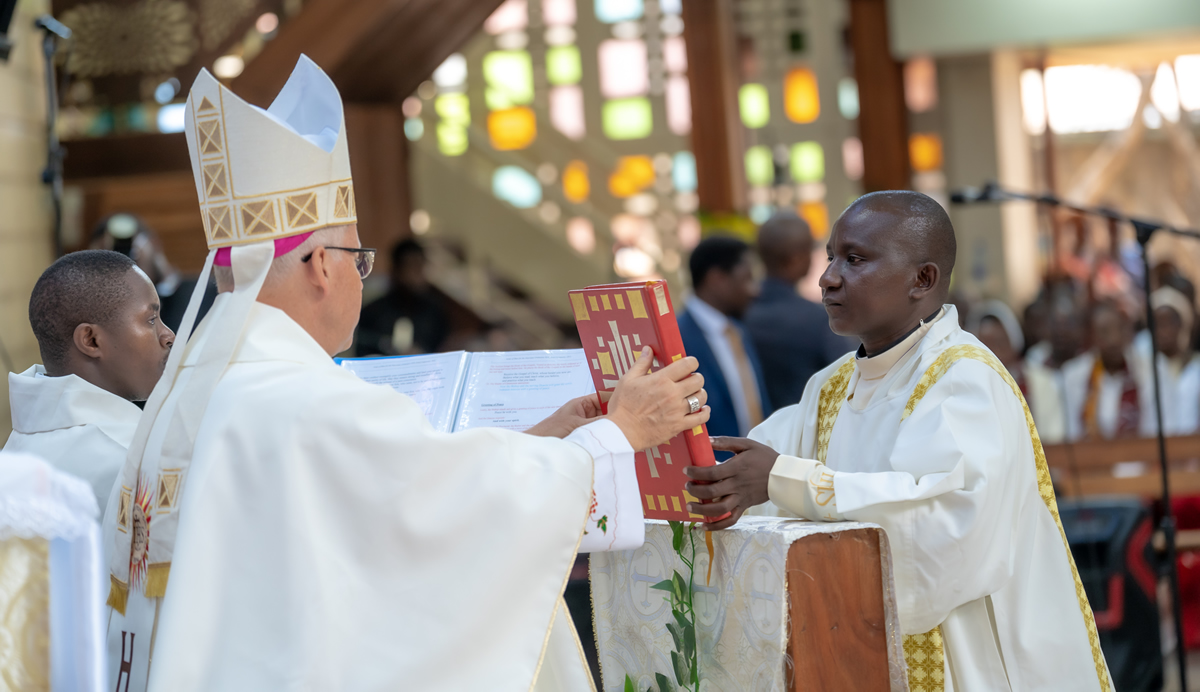
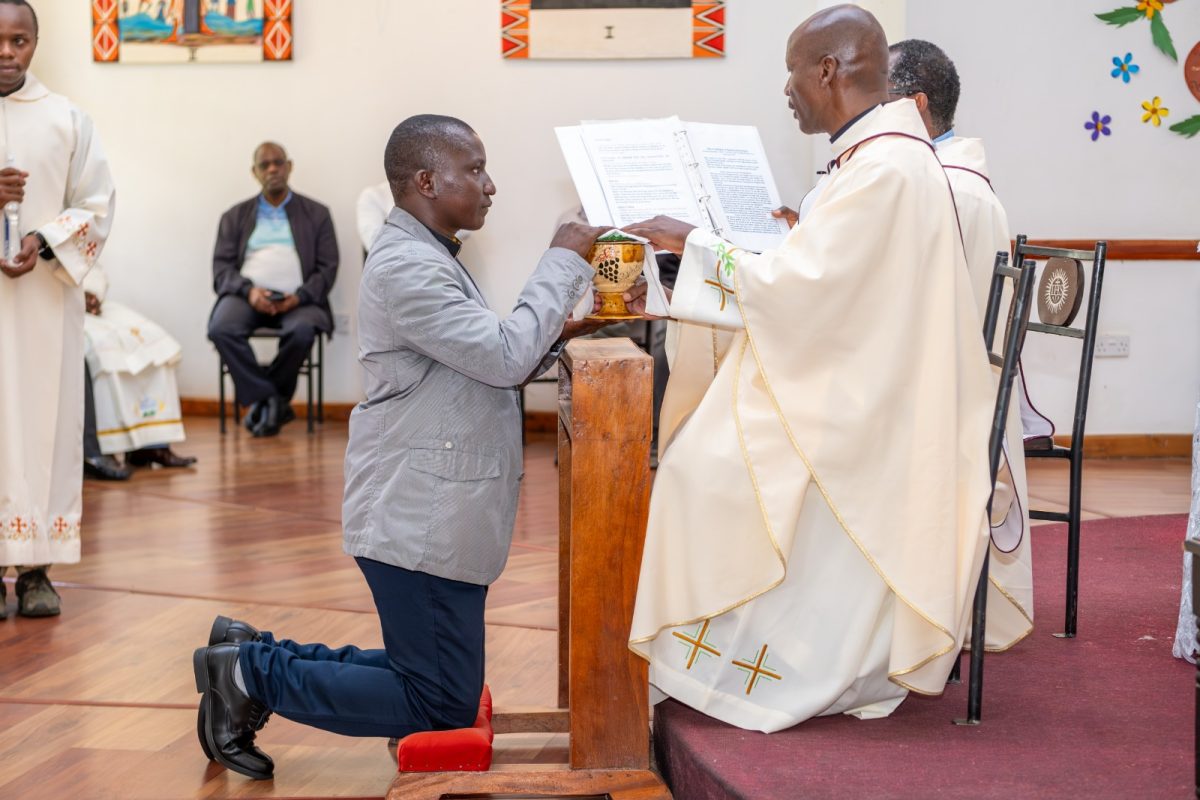
A milestone in this journey occurred on 14 February 2026, when I was ordained a Deacon (alongside 22 of my brothers). Lying prostrate during the Litany of the Saints, I was reminded that a vocation is sustained by the prayers of the entire (Pilgrim, Penitent, Triumphant) Church. As a deacon, I now serve at the altar and among the people of God, proclaiming the Gospel that is a treasure entrusted to me.
The ordination was both a step toward priesthood and a renewed commitment to serve the Church with humility and love.
Constant Themes: Discernment, Magis, and Community
Across all stages of formation, the threads of discernment, magis, and community interlace my story together.
Discernment has been the fibre weaving everything together. In times of consolation – joy, clarity, peace – I have felt the gentle confirmation of the Spirit. In times of desolation – doubt, dryness, fatigue – I have learned perseverance, recalling Ignatius’ counsel never to make major changes when the spirit is troubled. The magis – the desire for “the more” that leads to God’s greater glory – continues to challenge me, to love more generously and serve more deeply.
Community life has also been an enduring grace. Living with Jesuit companions from different cultures has embodied the universality of the Society. It has taught me fraternal correction, mutual support, and shared mission, and that no one walks this path alone; we are companions sent together.
Gratitude and Ongoing Conversion
I remain aware that formation does not end with ordination or academic milestones. Each mission, each community, each encounter will continue shaping me.
A verse from the Psalmist that constantly inspires me states: “One thing have I asked of the LORD, that will I seek after: that I may dwell in the house of the LORD all the days of my life …” (Ps. 27:4, RSV). To dwell in the Lord’s presence is to be continually sent from it.
Gratitude defines this journey. Above all, gratitude to God – who calls despite weakness, to my family – whose faith laid the foundation, to my formators, companions, friends, and the many faithful – whose prayers and solidarity sustain me, and, for the privilege of serving in the Society of Jesus – a body that seeks to labour for the greater glory of God and the salvation of souls.
Final Reflection
If there is one lesson this journey has taught me, it is this: vocation is less about personal fulfilment and more about faithful response to the will of God. The Lord calls, and by his grace, we answer. And in that continual exchange of grace and generosity, we discover that every stage of formation is not merely preparation for mission but already a mission itself.
I pray that God may continue to guide my steps and strengthen me to serve faithfully, always.
Ad Majorem Dei Gloriam, inque hominum salutem.
By Owiyo Ronald Odhiambo, SJ
Hekima University College