The world turns its eyes towards the Vatican with expectation as the Catholic Church stands at a historic threshold – the beginning of the papal conclave to elect the next Supreme Pontiff. In these days, from Rome to the remotest mission territories, from bustling cities to cloistered monasteries, every Catholic awaits the Pope who will be elected by the Cardinal electors.
A total of 135 Cardinals under the age of 80 are eligible electors in this conclave, representing 71 countries from 5 continents – a testament to the global nature of the Church. There are 53 from Europe, 37 from the Americas, 23 from Asia, 18 from Africa and 4 from Oceania. About 108 of them were created by Pope Francis, 22 by Pope Benedict XVI and 5 by Pope St John Paul II. Of the total number of Cardinals eligible to vote, two have confirmed that they won’t be able to attend for health reasons, bringing the total to 133.
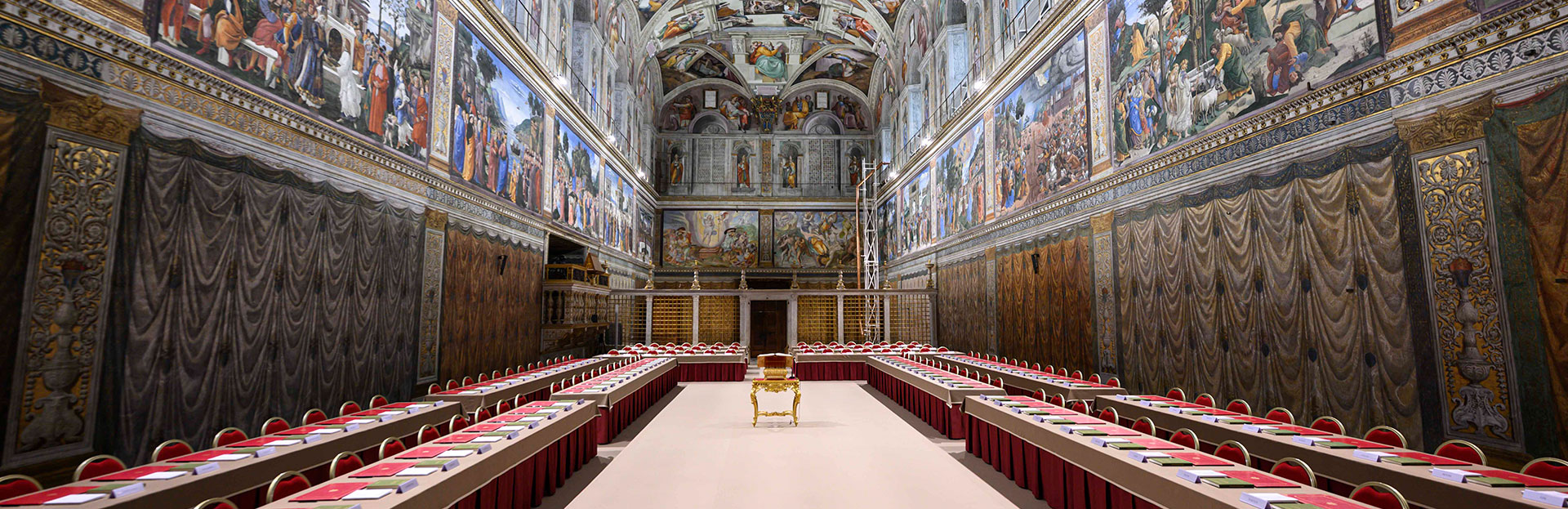
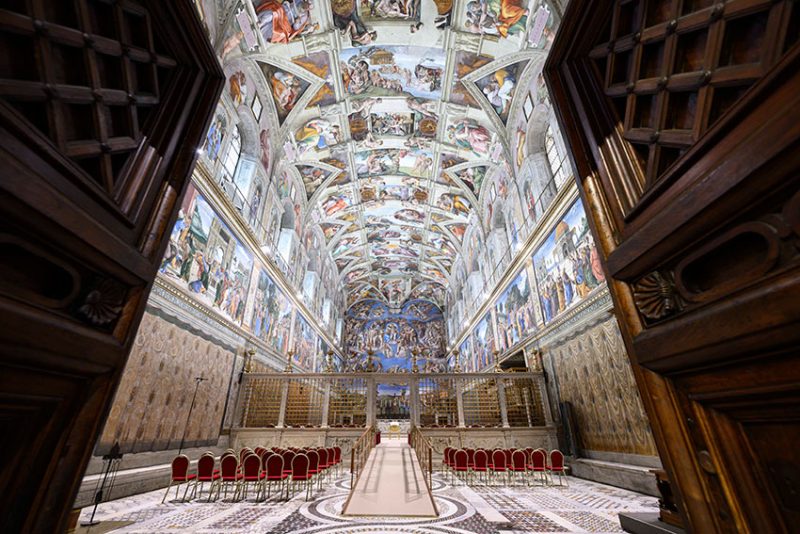
A conclave operates under strict confidentiality, and for its duration, the Cardinal electors are sequestered within the Vatican City, primarily residing in the Domus Sanctae Marthae. Voting takes place in the Sistine Chapel where ballots are cast in successive rounds until a candidate secures a two-thirds majority. After each vote, the ballots are burned. Black smoke indicates that no decision has been reached, while white smoke signals that a new Pope has been elected.
The process of the conclave is not a mere formality or a political event. It is a sacred discernment, guided by prayer, tradition, and the belief that the Holy Spirit is at work in its quiet, yet decisive action. The conclave carries a weight of hope, continuity, renewal, and ecclesial governance for over a billion Catholics across the globe.
For the Society of Jesus, this sense of expectation is uniquely poignant as the Jesuits reflect on the papacy of one of ours – Pope Francis, the first Jesuit Pope. His election in 2013 brought with it a redefined momentum, with an emphasis on mercy, care for the poor and the marginalized, concern for the plight of migrants and refugees, and a shared responsibility for the care of our common home. Pope Francis also emphasized synodality as a core aspect of his vision for the Church, highlighting it as a path of common discernment, participation and mission. The Synod on Synodality, initiated in his last years as Pope, was a tangible effort to reshape how decisions are made and how voices are heard within the Church.
Jesuits, as desired by St Ignatius, are not to seek power or ecclesiastical position. Indeed, Father Ignatius strongly underscored the necessity of avoiding such pursuits, as they may detract from the availability and service central to our vocation. Jesuits even vow not to seek position within and outside of the Church when they make their final profession to be finally incorporated into the apostolic body of the Society of Jesus. Yet, Pope Francis’s papacy has stirred up a new sense of responsibility for the global Society, and, as Father General Arturo Sosa said during a press conference organized in the wake of the death of Pope Francis, “as soon as the new Pope is elected, we [Jesuits] will make ourselves available to him, as we have done for more than 450 years”.
The Church now awaits with bated breath, watching for the colour of the smoke that will rise from the chimney of the Sistine Chapel, as has been the tradition for centuries. Just as the early Church gathered and awaited the outpouring of the Spirit at Pentecost, we again await the white smoke that announces a new Pope. This wait is of itself an act of collective prayer and expectation, but also of attentiveness to God’s providence working through human agency.
While no one knows who the next Supreme Pontiff will be, what is certain is that Catholics hope for a Shepherd after the heart of Christ – one that leads not from above, but from among the people. The world watches with anticipation, awaiting the emergence of a new successor of Saint Peter to guide the Catholic Church through the challenges of the modern era.